


Professional Lawn Aeration Services
Enjoy Healthier Roots, and Stronger Turf in Forsyth, Griffin, Peachtree City, and Surrounding Areas
Soil compaction is a common issue for lawns across Middle Georgia, especially in clay-heavy soils. Compacted soil restricts the movement of air, water, and nutrients, which limits root development and slows turf growth.
Lawn aeration relieves this compaction by opening the soil, improving oxygen flow, water absorption, and nutrient access. For warm-season grasses such as Bermuda, Zoysia, Centipede, and St. Augustine, aeration supports deeper roots and steadier growth throughout the active season.
What Lawn Aeration Does for Your Yard
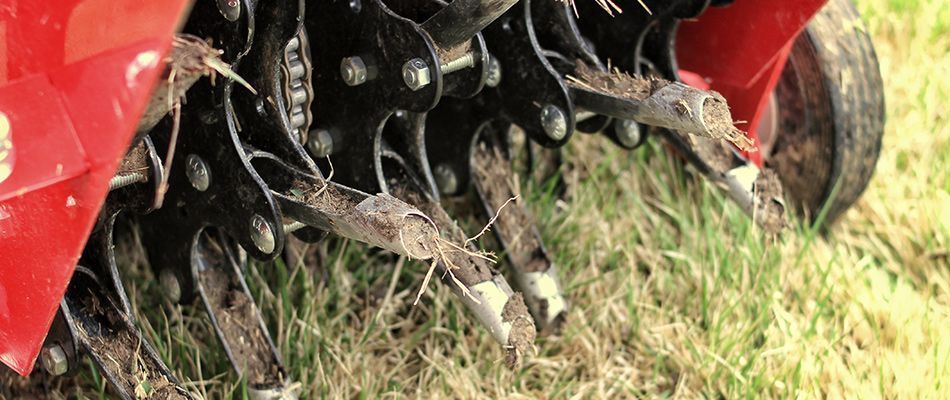
Aeration is not a surface-level service. Its benefits extend below the grass blades and into the soil profile, where turf health truly begins.
Improves Oxygen Flow to Roots
Grass roots require oxygen to function properly. Compacted soil limits oxygen availability, which weakens root systems and slows growth. Aeration restores airflow so roots can breathe and develop more efficiently.
Enhances Water Absorption
When soil is compacted, water often runs off rather than soaking in. Aeration opens pathways that allow water to move into the soil evenly, reducing puddling and improving drought tolerance.
Increases Nutrient Uptake
Fertilizers and soil amendments are only effective if they can reach the root zone. Aeration helps nutrients move deeper into the soil, improving the effectiveness of every fertilization application.
Encourages Deeper Root Growth
Shallow roots are more vulnerable to heat stress, drought, and wear. Aeration supports deeper root development, which leads to stronger, more resilient turf.
Reduces Thatch Buildup
Excess thatch can trap moisture, harbor pests, and block nutrients. Aeration helps manage thatch by improving microbial activity that breaks organic matter down naturally.
Common Signs Your Lawn Needs Aeration
Many homeowners are unaware that their lawn is compacted until problems become visible.
Common indicators include:
- Water pooling or running off during irrigation or rainfall
- Thin or uneven turf growth
- Soil that feels hard or dense underfoot
- Grass that struggles despite proper fertilization
- Increased weed pressure in stressed areas
- Poor recovery from heat or foot traffic
In Middle Georgia, clay-heavy soil makes compaction especially common, even in lawns that receive regular care. Aeration restores balance below the surface, which allows visible improvements to follow.
Core Aeration vs. Liquid Aeration
Not all aeration methods deliver the same results. Turf Magic focuses on core aeration, which provides the most measurable and lasting benefits for warm-season turf.
Core Aeration
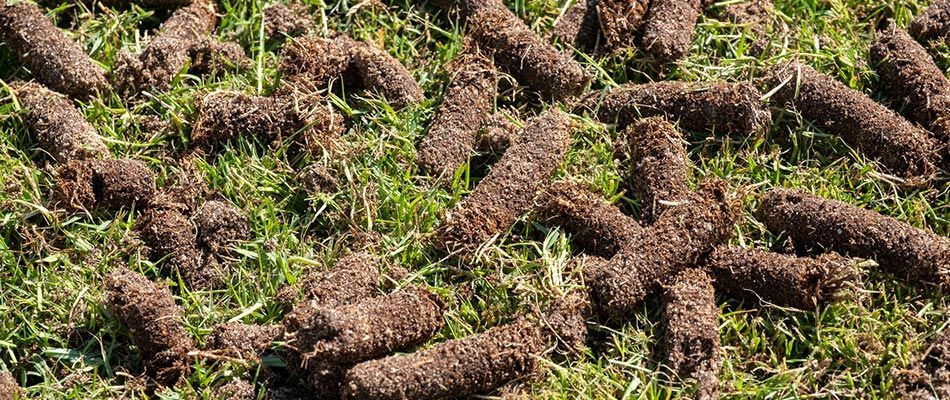
Core aeration mechanically removes small plugs of soil from the lawn. These openings relieve compaction immediately and create space for air, water, and nutrients to penetrate the root zone. Over time, the soil cores break down naturally and reintegrate into the lawn.
This method is widely recognized as the most effective aeration technique for compacted lawns, particularly those with clay soils.
Liquid Aeration
Liquid aeration products rely on surfactants or soil conditioners to loosen soil chemically. While they may provide limited short-term benefits, they do not physically remove compaction and are not a replacement for core aeration in heavily compacted soil.
For most Middle Georgia lawns, core aeration provides more consistent, long-term results.
When to Aerate Lawns in Middle Georgia
Timing plays a critical role in aeration effectiveness. Aeration should be performed when grass is actively growing and able to recover quickly.
Best Time for Warm-Season Grasses
For Bermuda, Zoysia, Centipede, and St. Augustine lawns, the ideal aeration window typically falls between late spring and early fall, with peak effectiveness during periods of active growth.
Aerating during this window allows roots to expand rapidly into newly opened soil channels. It also aligns well with fertilization schedules, which maximizes the benefit of both services.
Why Timing Matters
Aerating dormant turf can stress grass and delay recovery. Aerating during active growth ensures that the lawn responds positively, filling in more evenly and strengthening from the roots up.
What to Expect From Turf Magic’s Aeration Service
Turf Magic approaches aeration as part of a broader lawn health strategy rather than a one-time solution.
Lawn Evaluation
Before aeration, technicians assess soil conditions, turf type, and compaction severity. This evaluation ensures aeration is performed at the proper time and intensity.
Professional Core Aeration
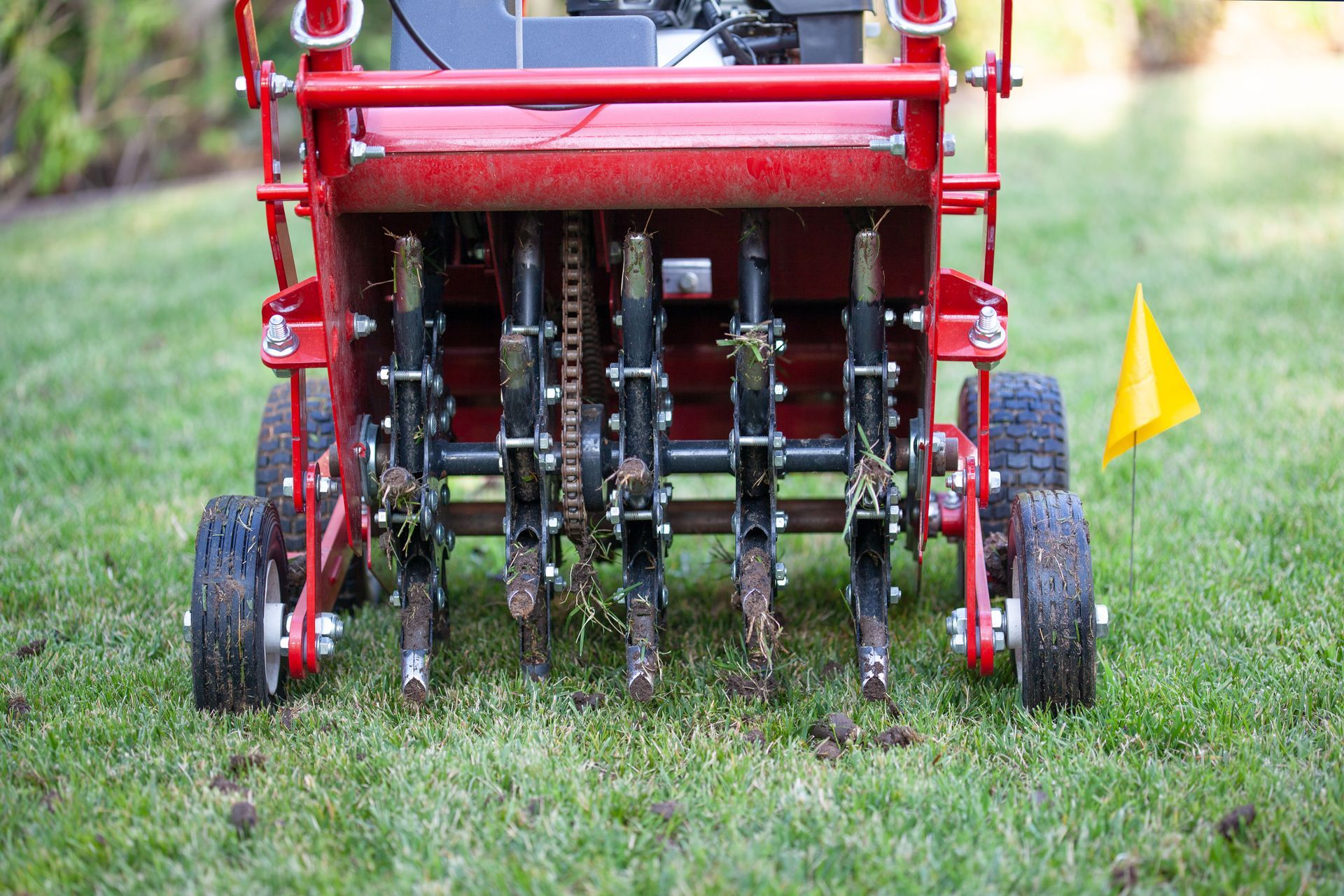
We use commercial-grade aeration equipment designed to remove consistent soil cores at the proper depth and spacing. This ensures uniform results across the entire lawn.
Minimal Disruption
Soil cores remain on the lawn surface and naturally break down within a short period. They do not damage the turf and help improve soil composition as they decompose.
Clear Post-Service Guidance
After aeration, homeowners receive guidance on watering, mowing, and timing of additional services such as fertilization or overseeding.
Aeration for Residential, Commercial, and HOA Properties
Turf Magic provides aeration services for a wide range of property types throughout Middle Georgia.
Residential Lawns
Homeowners benefit from improved turf density, better color, and stronger seasonal performance.
Commercial Properties
Aeration supports durable turf that withstands foot traffic and maintains a professional appearance.
HOA and Shared Green Spaces
Consistent aeration programs help maintain uniform turf health across common areas and high-visibility spaces.
Aeration FAQs
Will aeration damage my lawn?
No. Core aeration is safe for healthy turf and improves long-term lawn performance. Temporary surface disruption is minimal and resolves quickly.
How often should lawns be aerated?
Most lawns benefit from aeration every one to two years. Lawns with heavy traffic or severe compaction may benefit from more frequent service.
Should I water before or after aeration?
Moderate soil moisture improves aeration effectiveness. Post-service watering recommendations will be provided based on conditions.
Is aeration pet-safe?
Yes. Aeration does not involve chemicals and is safe for pets and family members.
Local Expertise Makes the Difference
Middle Georgia lawns face unique challenges, including dense clay soils, heat stress, and variable rainfall. Turf Magic’s local experience ensures aeration services are timed, executed, and integrated correctly for these conditions.
Our technicians understand how warm-season grasses respond to aeration and how to coordinate services for consistent improvement rather than short-term results.
Strengthen Your Lawn From the Ground Up
Aeration creates the foundation for healthier turf by improving soil structure, root development, and nutrient efficiency. When performed at the right time and paired with a comprehensive lawn care program, it supports thicker, stronger grass that performs better throughout the year.
If your lawn struggles with compaction, poor drainage, or uneven growth, professional aeration may be the missing piece.