


Professional Tree and Shrub Fertilization
Stronger Roots, Healthier Growth, and Long-Term Landscape Protection Across Georgia
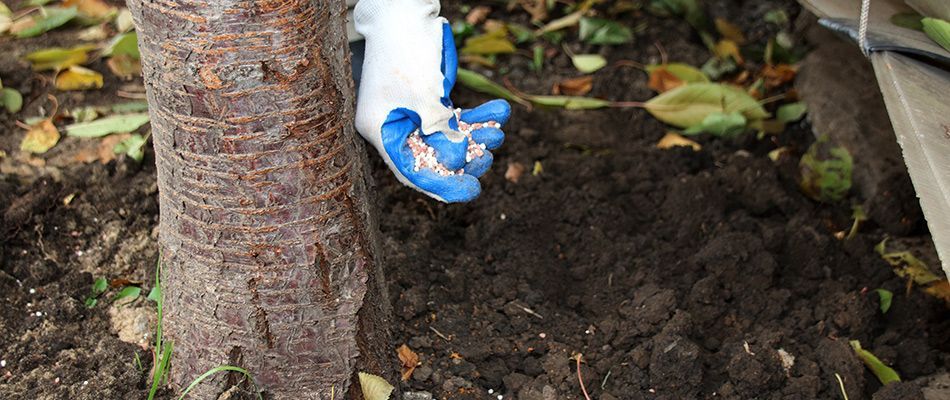
Trees and shrubs face unique challenges in Middle Georgia, including clay-heavy soils, seasonal heat, and competition for nutrients from turfgrass. These conditions can limit root development and long-term plant health.
Professional tree and shrub fertilization delivers targeted nutrients that support root strength, balanced growth, and improved resistance to stress, pests, and disease, helping landscapes remain healthy and resilient year after year.
How Trees and Shrubs Absorb Nutrients
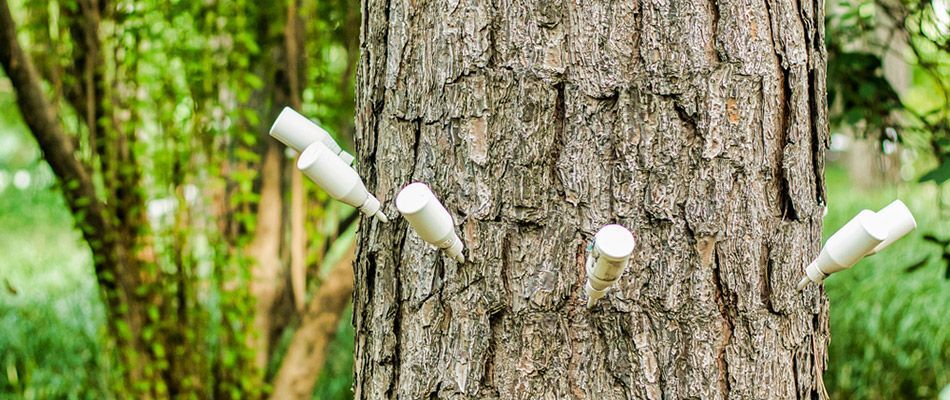
Unlike turfgrass, trees and shrubs rely on deeper, more complex root systems. Most nutrient uptake occurs through feeder roots located beneath the soil surface, often extending well beyond the visible canopy.
In compacted or nutrient-poor soils, these feeder roots struggle to access oxygen, water, and minerals. Turfgrass growing nearby can further compete for available nutrients, leaving trees and shrubs undernourished even when lawns appear healthy.
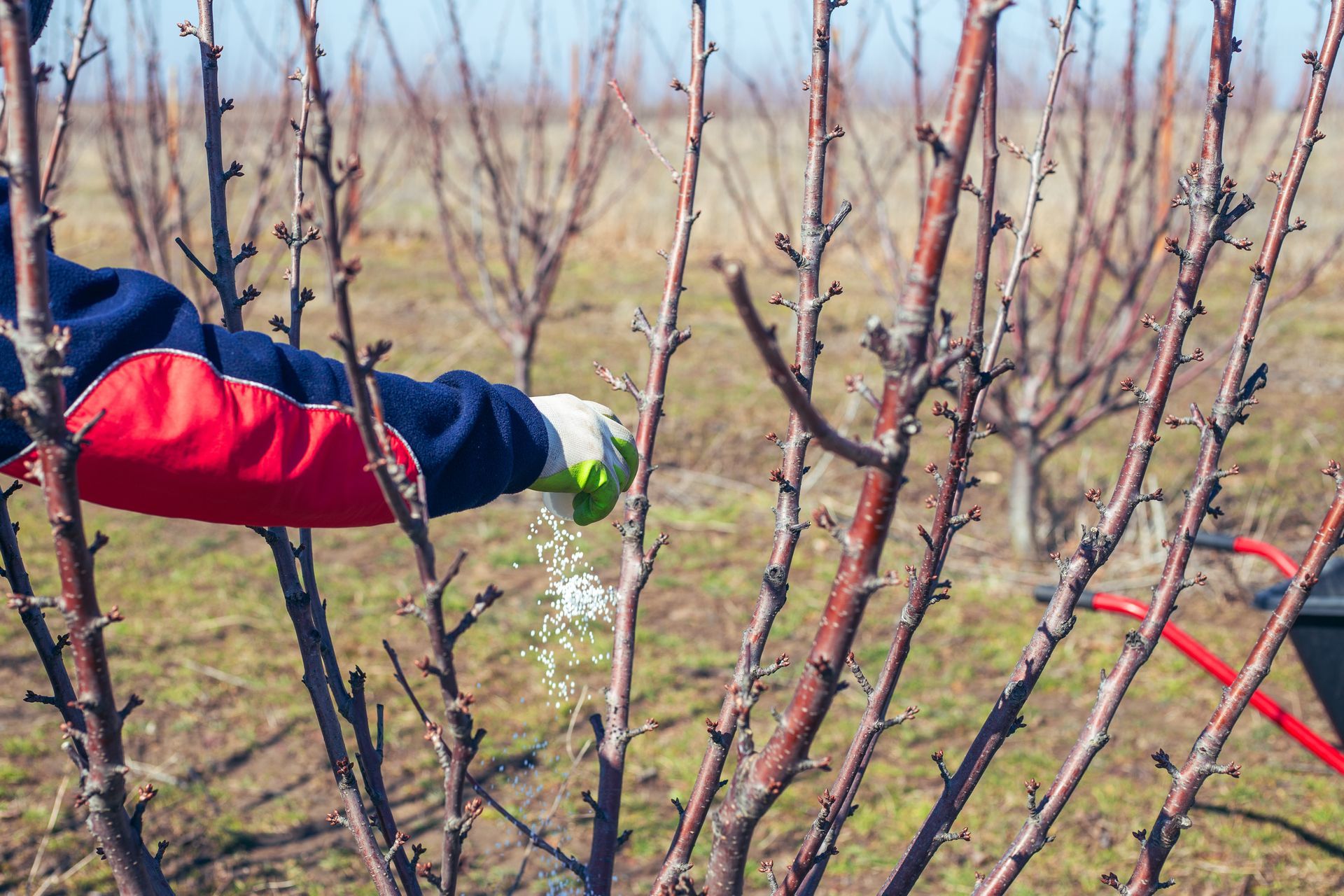
Professional fertilization targets the root zone directly, delivering nutrients where woody plants can absorb them efficiently. This approach improves uptake, reduces waste, and supports balanced growth.
Common Signs of Nutrient Deficiency in Trees and Shrubs
Nutrient deficiencies do not always appear suddenly. Many develop gradually, weakening plants over time before visible decline becomes obvious.
Common warning signs include:
- Pale or yellowing leaves
- Reduced leaf size or sparse foliage
- Poor flowering or fruit production
- Dieback at branch tips
- Slow or stunted growth
- Increased susceptibility to pests and disease
Because these symptoms can resemble disease or insect damage, proper evaluation is essential before treatment begins.
Why Middle Georgia Soils Create Nutritional Challenges
Soil conditions across Middle Georgia vary widely but share several common characteristics that affect plant health.
Clay-Heavy Soil
Clay soils retain water but often restrict airflow and root expansion. Nutrients may be present in the soil but unavailable to plants due to compaction or poor oxygen exchange.
pH Imbalance
Soil pH influences nutrient availability. In soils with improper pH levels, essential nutrients become chemically inaccessible to plants, even when fertilizer is applied.
Nutrient Competition
Lawns, trees, shrubs, and ornamental plants all compete for nutrients. Turfgrass often absorbs surface nutrients quickly, leaving deeper-rooted plants underfed without targeted fertilization.
Tree and shrub fertilization addresses these issues by delivering nutrients below the surface and supporting root health more effectively than surface feeding alone.
Turf Magic’s Tree and Shrub Fertilization Approach
Turf Magic treats tree and shrub care as an extension of comprehensive landscape management rather than an isolated service. Our approach focuses on long-term plant health, not short-term cosmetic improvement.
Evaluation and Plant Assessment
Every fertilization plan begins with an assessment of plant type, size, age, location, and overall condition. Technicians evaluate soil conditions, growth patterns, and visible stress indicators to determine appropriate nutrient needs.
This evaluation ensures fertilization supports healthy growth without encouraging excessive or unbalanced development.
Deep Root Fertilization
Turf Magic uses deep root fertilization methods to place nutrients directly into the root zone. This process bypasses surface competition and improves nutrient uptake efficiency.
Deep root fertilization also helps loosen compacted soil, improving oxygen and water movement around root systems.
Customized Nutrient Blends
Different plants require different nutrient ratios. Evergreen shrubs, flowering ornamentals, and shade trees all respond differently to fertilization.
Turf Magic selects nutrient blends based on plant species, seasonal timing, and local soil conditions. Micronutrients are included when deficiencies are likely or confirmed.
Nutrients That Support Tree and Shrub Health
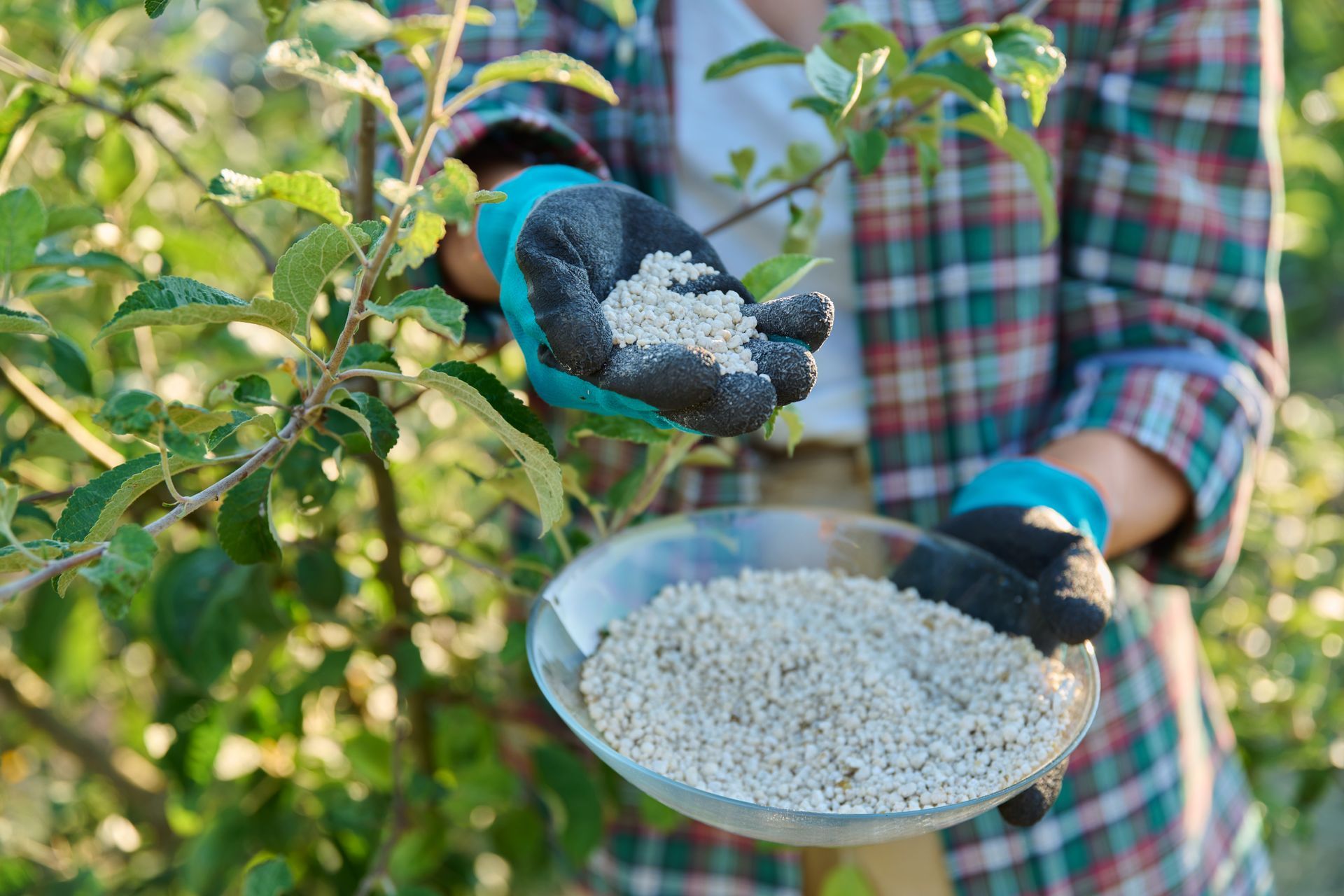
Healthy trees and shrubs rely on a balance of macronutrients and micronutrients.
Nitrogen
Supports leaf development and overall growth. Applied carefully to avoid excessive foliage growth that can weaken plant structure.
Phosphorus
Encourages root development and supports flowering and energy transfer within the plant.
Potassium
Improves stress tolerance, disease resistance, and overall plant strength.
Micronutrients
Iron, manganese, zinc, and other micronutrients support chlorophyll production, enzyme function, and color development. Deficiencies are common in Georgia soils and often require targeted supplementation.
Balanced nutrition supports steady, durable growth rather than rapid-but-vulnerable expansion.
Seasonal Timing for Tree and Shrub Fertilization
Timing plays a major role in fertilization effectiveness. Applying nutrients when plants can actively absorb them ensures better results and reduces waste.
Spring
Early-season fertilization supports new growth, leaf development, and root activity as plants emerge from dormancy.
Summer
Mid-season applications help plants manage heat stress, drought pressure, and nutrient depletion caused by active growth.
Fall
Late-season fertilization supports root development and energy storage, helping plants prepare for dormancy and recover more effectively in spring.
Turf Magic schedules fertilization based on plant needs, seasonal conditions, and weather patterns rather than rigid calendar dates.
How Fertilization Improves Pest and Disease Resistance
Healthy plants are more resistant to insects and disease. Proper nutrition strengthens cell walls, improves sap flow, and supports natural defense mechanisms.
Under-fertilized trees and shrubs often become targets for pests such as aphids, scale insects, and borers. Nutrient-stressed plants also struggle to recover from fungal infections or environmental damage.
Tree and shrub fertilization works best when coordinated with pest and disease monitoring, allowing early intervention when problems arise.
Tree and Shrub Fertilization for Residential and Commercial Properties
Turf Magic provides fertilization services for a wide range of property types throughout Middle Georgia.
Residential Landscapes
Homeowners benefit from healthier ornamentals, improved flowering, stronger shade trees, and long-term property value protection.
Commercial Properties
Fertilization supports professional appearance, consistent plant health, and reduced replacement costs for stressed landscape plants.
HOA and Community Spaces
Uniform fertilization programs help maintain consistent plant health across shared landscapes and high-visibility areas.
Tree and Shrub Fertilization FAQs
How often should trees and shrubs be fertilized?
Most landscapes benefit from fertilization one to two times per year, depending on plant type, soil conditions, and stress levels.
Can fertilization correct existing damage?
Fertilization supports recovery but does not reverse severe structural damage or advanced decline. Early intervention delivers the best results.
Is fertilization necessary if plants look healthy?
Yes. Many nutrient deficiencies develop gradually and may not be visible until stress occurs. Preventative fertilization supports long-term stability.
Is tree and shrub fertilization safe for pets and families?
Yes. Applications are performed by licensed technicians using professional products. Once treatments are complete and guidelines are followed, treated areas are safe for normal use.
Why Local Expertise Matters
Middle Georgia’s climate and soils require localized knowledge. National programs often apply generic treatments that fail to account for clay soils, seasonal heat, and nutrient variability.
Turf Magic’s technicians understand how regional conditions affect trees and shrubs. Fertilization plans are adjusted based on weather trends, plant response, and ongoing observation rather than one-size-fits-all schedules.
This local expertise leads to more consistent plant health and fewer long-term issues.
Strengthen Your Landscape From the Roots Up
Trees and shrubs are long-term investments that require consistent care to thrive. Professional fertilization supports root health, balanced growth, and improved resistance to stress, pests, and disease.
When integrated with lawn fertilization, weed control, and soil management, tree and shrub fertilization helps create a healthier, more resilient landscape throughout Middle Georgia.