

Professional Lawn Disease Control
Protecting Turf Health Across Middle Georgia and South Metro Atlanta
Middle Georgia’s warm temperatures, humidity, and frequent rainfall create conditions where lawn diseases can develop quickly, even in well-maintained turf. Fungal activity often increases during periods of heat and moisture, placing stress on warm-season grasses.
Lawn disease control targets these issues through accurate identification and timely treatment, helping protect turf density, root health, and seasonal performance for grasses such as Bermuda, Zoysia, Centipede, and St. Augustine.
What Causes Lawn Diseases to Develop?
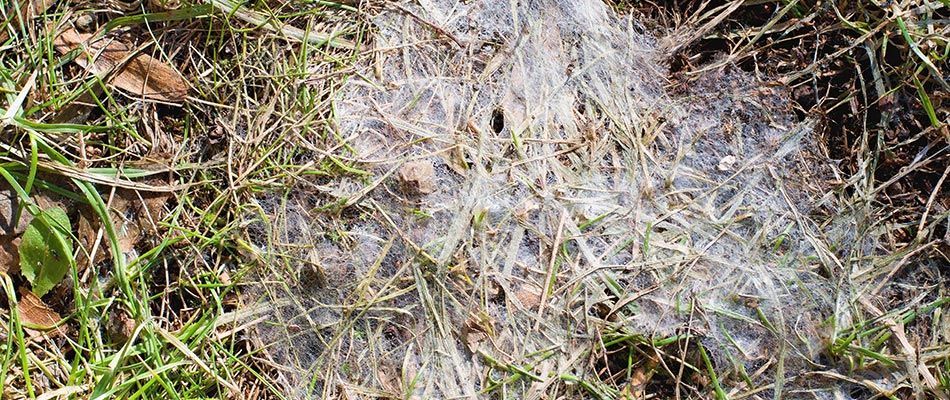
Lawn diseases do not appear randomly. They develop when environmental conditions favor fungal growth and turf health becomes compromised.
Common contributing factors include:
- Extended periods of moisture on grass blades
- High nighttime humidity and warm temperatures
- Poor soil drainage or compacted soil
- Excessive thatch buildup
- Improper fertilization timing or rates
- Dull mowing blades that tear grass tissue
- Limited air circulation in shaded or enclosed areas
In Middle Georgia, summer heat paired with afternoon storms often creates ideal disease conditions. Without proper monitoring, fungal activity can escalate quickly, leading to thinning turf and widespread damage.
Common Lawn Diseases Found in Middle Georgia
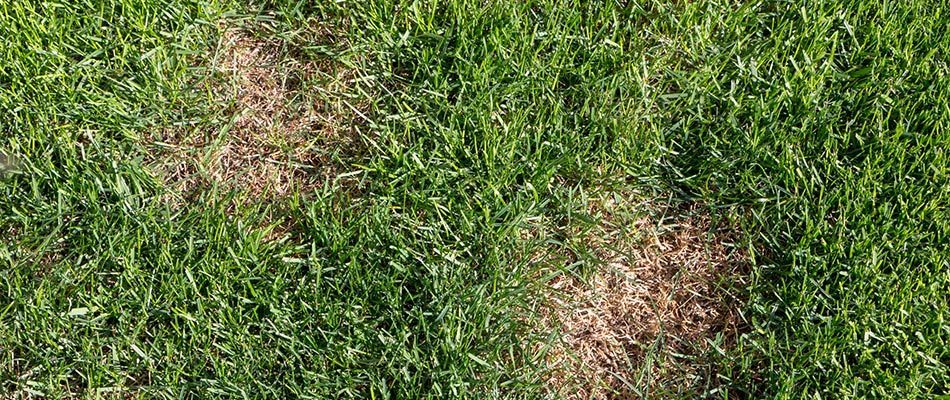
Several turf diseases appear frequently in this region due to climate and grass types. Understanding these diseases helps explain why professional diagnosis and treatment matter.
Brown Patch
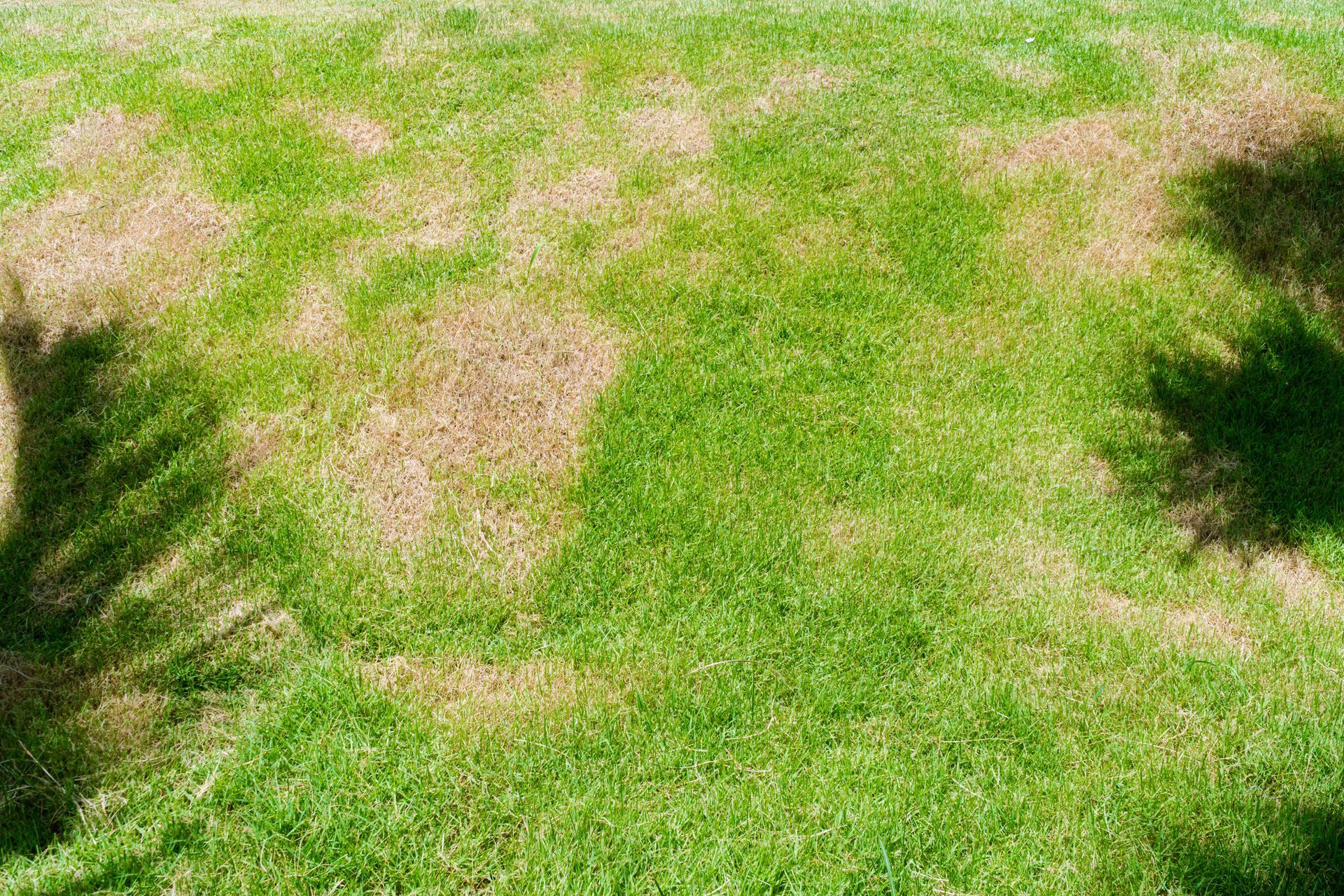
Brown patch is one of the most common lawn diseases affecting warm-season grasses, particularly during warm, humid weather. It appears as circular or irregular brown areas that expand rapidly under favorable conditions. High nitrogen levels and prolonged leaf moisture increase susceptibility.
Dollar Spot
Dollar spot produces small, straw-colored patches that can merge into larger areas of thinning turf. It often develops during periods of warm days and cool nights, especially in lawns with nutrient imbalances.
Large Patch
Large patch primarily affects Zoysia and Centipede lawns during spring and fall transitions. Symptoms include expanding patches with orange or bronze margins. Damage often becomes visible when grass struggles to green up properly.
Gray Leaf Spot
Gray leaf spot commonly impacts St. Augustine lawns during hot, rainy periods. It causes leaf lesions that weaken turf density and can spread quickly if untreated.
Pythium Blight
Pythium thrives in saturated soil and warm conditions. It spreads aggressively and can cause rapid turf collapse if not addressed promptly. Proper drainage and timely fungicide application are critical for control.
Each disease requires a different treatment approach, which is why accurate identification is essential.
Why Lawn Diseases Spread Quickly Without Treatment
Once disease activity begins, it often accelerates due to favorable environmental conditions. Fungal spores spread through water movement, mowing equipment, foot traffic, and even irrigation systems. Without intervention, damaged turf becomes weaker and more vulnerable to secondary infections.
Diseased areas also struggle to recover on their own. Thinned turf allows weeds to establish, soil temperatures to rise, and moisture to linger longer at the surface. This cycle creates ongoing stress that extends beyond the initial outbreak.
Effective lawn disease control focuses on stopping disease progression while restoring turf strength.
Turf Magic’s Lawn Disease Control Approach
Turf Magic treats lawn disease as part of a comprehensive turf management system rather than a standalone service. Our approach combines accurate diagnosis, targeted treatment, and long-term prevention.
Lawn Evaluation and Diagnosis
Every disease treatment begins with a careful evaluation. Technicians assess grass type, pattern of damage, soil moisture, recent weather trends, and lawn history. This process helps distinguish between disease, insect damage, nutrient deficiency, and environmental stress.
Accurate diagnosis ensures that treatments address the underlying issue rather than masking symptoms.
Targeted Fungicide Applications
When disease pressure is confirmed, Turf Magic applies professional-grade fungicides designed to control specific pathogens. Products are selected based on the disease type, severity, and current weather conditions.
Applications are made at precise rates and intervals to ensure effectiveness while protecting turf health.
Integration With Lawn Care Programs
Disease control works best when integrated with fertilization, weed control, aeration, and soil management. Turf Magic coordinates treatments so that nutrient availability, mowing guidance, and irrigation practices support recovery rather than exacerbate disease pressure.
Preventative Lawn Disease Management
While curative treatments stop active disease, prevention plays an equally important role. Preventative disease management reduces the likelihood of outbreaks and supports long-term turf stability.
Preventative strategies include:
- Balanced fertilization that avoids excessive nitrogen during peak disease periods
- Soil pH management to improve nutrient uptake and root health
- Aeration to reduce compaction and improve drainage
- Proper mowing height to reduce stress on grass blades
- Watering guidance that minimizes prolonged leaf moisture
Turf Magic monitors seasonal risk factors and adjusts treatments accordingly, helping lawns remain stable even during challenging weather patterns.
How Lawn Disease Control Improves Overall Turf Health
Disease control does more than stop visible damage. It strengthens the entire lawn system.
Stronger Turf Density
Healthy turf recovers more quickly from stress and maintains better coverage, which limits weed establishment.
Improved Root Function
Reducing disease pressure allows roots to function efficiently, improving water and nutrient absorption.
Better Response to Fertilization
Disease-free turf utilizes fertilizer more effectively, resulting in steadier color and growth.
Reduced Long-Term Damage
Unchecked disease can weaken turf for multiple seasons. Proper control limits lingering effects and supports consistent improvement.
Lawn Disease Control FAQs
Is lawn disease control safe for pets and families?
Yes. Turf Magic uses professional products applied by licensed technicians. Lawns are safe for normal use once applications have dried, and clear guidance is provided after each visit.
Can lawn disease come back after treatment?
Disease pressure can return if environmental conditions remain favorable. Preventative management and integrated lawn care reduce recurrence.
How quickly will I see improvement?
Disease progression typically slows soon after treatment. Visual recovery depends on grass type, severity, and growing conditions, with gradual improvement expected as turf regenerates.
Can disease be mistaken for other problems?
Yes. Nutrient deficiencies, insect damage, and drought stress can resemble disease symptoms. Professional diagnosis ensures proper treatment.
Local Expertise Makes a Measurable Difference
Middle Georgia lawns face specific challenges related to heat, humidity, and soil composition. National providers often rely on generalized treatment schedules that overlook these local variables.
Turf Magic’s technicians understand how warm-season grasses respond to disease pressure in this region. Treatments are timed, adjusted, and supported by local experience rather than generic templates.
This localized approach leads to more consistent outcomes and healthier turf over time.
Protect Your Lawn From Disease and Seasonal Stress
Lawn diseases can undermine months of progress if left unmanaged. Professional lawn disease control protects your investment by stopping active infections and strengthening turf against future outbreaks.
When combined with fertilization, weed control, and soil management, disease control supports a lawn that remains dense, resilient, and visually consistent throughout the growing season.